
Strange taxes through the ages
It was Benjamin Franklin, the US statesman, who famously said that in this world nothing is certain except death and taxes. He was speaking over 200 years ago, yet the adage is as true today as it was then. Rulers and governments have levied various types of taxes throughout the centuries.
Taxation has its historical roots in the first years of record-keeping: the earliest signs are recorded on clay tablets found in Mesopotamia, part of modern-day Iraq. Tax records there date from around 3300 BC. Archaeology confirms that Egypt employed one of the first tax systems: between 3000 and 2800 BC, Egyptian pharaohs employed collectors or scribes to impose levies on a range of goods and produce, such as cooking oil. Tax was collected twice a year and provided revenue primarily to fund government activity, to support the head of state and to finance the conduct of wars.
Ancient Greece and Rome are often cited, too, among the earliest regimes attempting to raise taxes in an effort to generate funds for government expenditure. Greek city states imposed taxes on commodities when wars were fought or when there was an emergency (where some form of democracy applied), but usually direct taxation only applied to the part of the population entitled to vote. In times of peace, the state governors sometimes paid back revenue no longer required for military purposes.
Income tax (i.e. a tax specifically levied on the earnings of individuals and corporations) is a common tax in modern times, but it is a relatively modern form of taxation. This is because the levying of in-come tax requires a fairly orderly society with a money-based economy and reliable records. Until a few centuries ago, these requirements did not exist and until then the most common forms of taxes were those based on ownership of assets, such as land or slaves. Before income tax was possible, rulers had to be far more creative to extract their dues from the citizens. Here are some examples of strange taxes levied through the centuries.
Cooking Oil Tax
In order to fund the construction of the pyramids, the Pharaohs of Egypt levied many taxes, mostly on food produce. One of their oddest laws concerned the taxation of cooking oil. Citizens were obliged to obtain their cooking oil from the Pharaoh’s officials and recycling was prohibited. Egyptian tax collectors would audit every house-hold to ensure that they were using the appropriate amount, confiscate their old supplies and force them to buy fresh, taxed cooking oil. As the Egyptians at this time didn’t have an official currency, the tax was taken from harvests and property.
Urine Tax
In Ancient Rome, human urine was highly valued – the ammonia it contained was used for tanning and laundering and, shockingly, brushing teeth. The emperor Nero levied a tax on those collecting it from public urinals and Emperor Vespasian reintroduced it in around 70 AD. The tax led to the Latin saying “Pecunia non olet”: “money does not stink”.
Beard Tax
Peter the Great, Tsar of Russia from 1682-1725, was surely one of history’s greatest advocates of odd taxes. Taking taxation to new levels of absurdity he levied taxes on drinking water, beehives and souls (actually this was just a poll tax – not quite as interesting as it sounds). He even created a committee whose sole purpose was to think up new taxes. One of his most ludicrous taxes, introduced in 1705, was levied on men who grew beards.
The tax was part of Peter’s modernising reforms and was used to coerce his countrymen into dropping archaic hirsutist customs and bring them into line with the clean-shaven citizens of modernised Western Europe.

Window Tax
Window tax, or glass tax, was introduced in England (and subsequently the whole of Britain) in 1696 during the reign of King William III. The window tax was a type of property tax where the tax liability was determined by the number of windows a dwelling had. To minimize tax liability, some homeowners bricked up windows or built houses with fewer windows, sometimes even creating window-less floors. Houses with more than 10 windows had to pay a huge 10 shillings. The tax negatively impacted the health of the nation as unscrupulous landlords bricked up the windows in their tenants’ houses, leading to damp and unlit conditions. After years of campaigning, the tax was repealed in 1851. Interestingly, the consequences of the window tax can still be seen in Britain today: many of the period’s surviving buildings feature bricked-up window spaces.
Hat Tax
Hat Tax, much like window tax, was levied by the British Government in 1784 as a way of taxing citizens according to their wealth without resorting to income tax. First introduced by Prime Minister Pitt the Younger, hat tax laws forced hat sellers to acquire licences and employed a tiered tax system dependent upon the cost of the hat with mandatory tax-revenue stamps pasted in its lining. Apparently, many tried to dodge the tax by claiming that their headwear wasn’t actually a hat. This form of evasion became so widespread that it led to government amendments to the legal definition of a hat in 1804.
Salt Tax
The crucial role of sodium chloride in the diet of humans and countless applications within science, religion and other areas have seen it shape cultures, define economies, cause wars and become one of history’s most taxed commodities. A tax that led to huge change was the “gabelle” salt tax in France, so unpopular from its establishment in the mid-14th century that it was a contributing factor in the French Revolution. Although it was repealed in 1790, Napoleon reinstated it just 16 years later, and it was only abolished in 1945 after the Second World
War. The British also taxed salt, leading to Gandhi’s Salt March in 1930 to protest British rule in India.
Radios/Television
The UK was the first country to create a license to fund the public radio service in 1923 when an annual fee of 10 shillings was introduced to cover radio sets under the Wireless Telegraphy Act. This later extended to TV, with the BBC license fee launching in 1946. Two-thirds of countries in Europe and half of countries in Asia and Africa (including South Africa) also use licenses to fund public TV, although the US and Canada have never pursued this path.
Playing cards
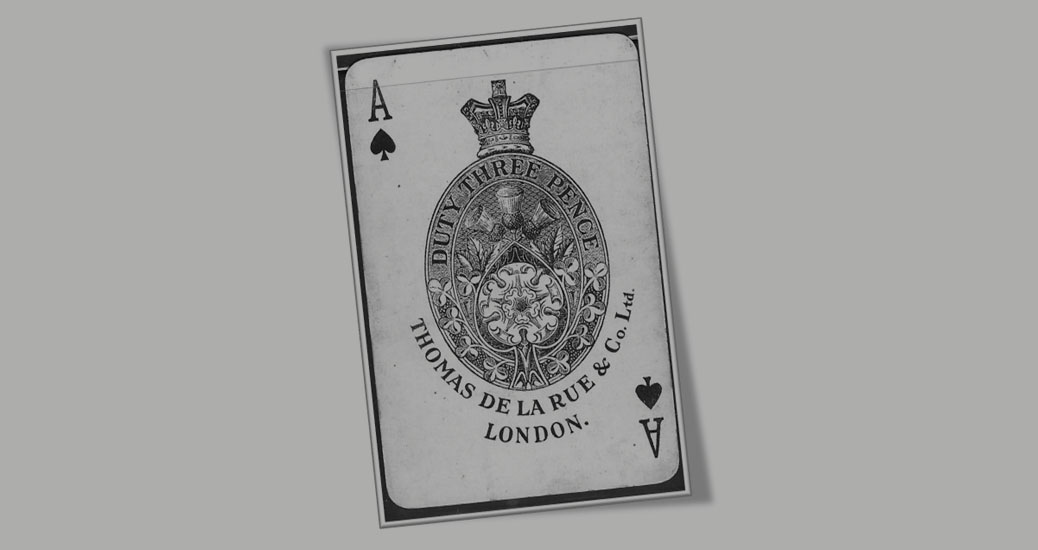
King James of England and Scotland is said to have passed a law requiring the Ace of Spades in every pack of cards to carry its printing house’s insignia, to prove tax had been paid on its manufacture. Forging an ace of spades was punishable by hanging – and the card is still known as the “death card”. Stamp duty on playing cards was only abolished in 1960.
Squirrels
This wasn’t a tax paid on squirrels, but with squirrels. Gray squirrels were once so numerous in Ohio that an 1807 law required taxpayers to turn in to the township clerk a quota of squirrel scalps “in proportion [to] their county levies, provided that it does not exceed 100 or be less than ten” along with their tax payment.
Taxes are more than just a source of revenue—they shape our lifestyles, influence what we buy, and even affect how we behave. From fashion to food, governments have used taxes to nudge behaviours, encourage certain choices, or discourage others, often with unexpected or negative consequences. These quirky examples remind us that while taxes are inevitable, they can also leave a lasting impact—or even become the punchline of history’s oddest decisions. So the next time you pay a tax, just be glad it’s not on your beard or the number of windows in your home!
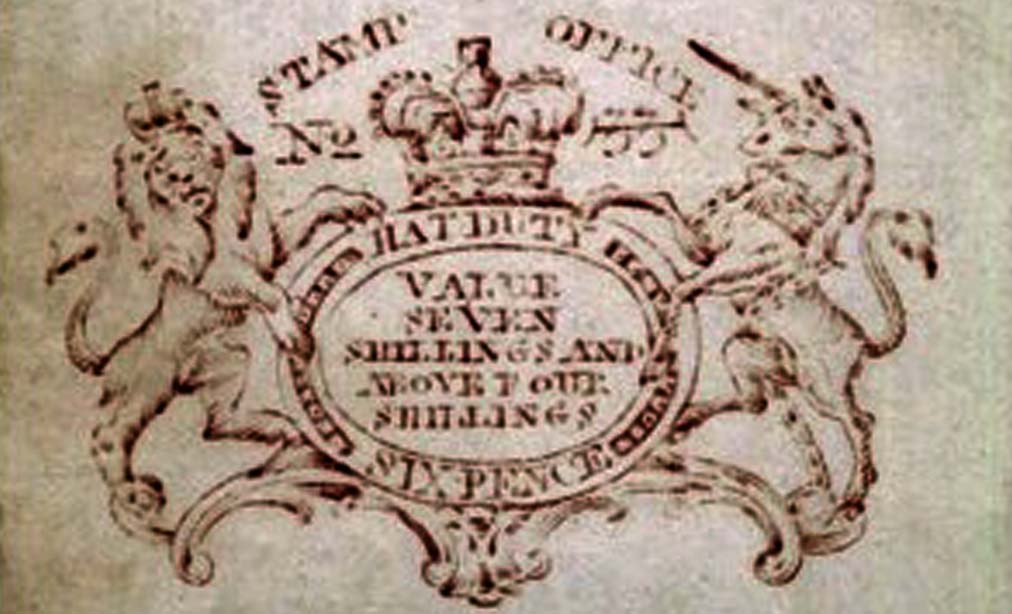 Hat stamp from 1803