
Direct vs Indirect offshore investments:
Before you take the plunge investing make sure you understand your motivation for investing offshore, as well as the implications of your choices. It should be a strategic decision taken with the construction of your overall portfolio in mind and as part of a carefully crafted, holistic financial plan.
One of the first choices you need to make is between using a rand-denominated offshore feeder fund (“asset swop”) facility and investing directly in off-shore unit trusts. The best option (or combination of options) is the one that will most suit your needs and that will best complement your overall financial plan.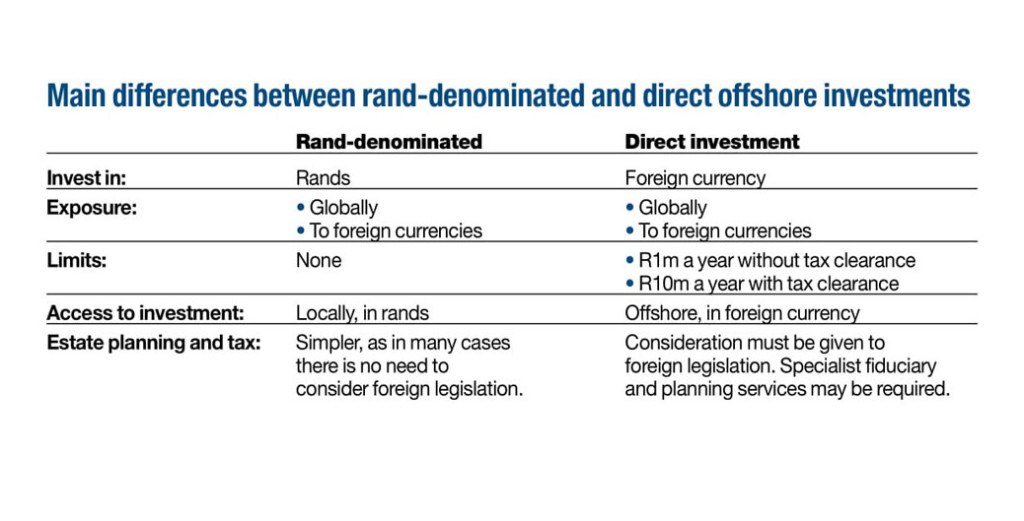
Although rand hedging is the main reason many people invest offshore, investors already gain substantial rand-hedge exposure through JSE-listed companies that generate their earnings abroad. Keep in mind that, because your expenses are priced in rands and are linked to South African inflation, moving too much of your portfolio offshore could result in a number of problems. Rand-denominated offshore investments are ideal if you don’t necessarily want to expatriate your capital but want to take an investment view.
Various rand-denominated offshore (feeder fund) unit trusts are available. Typically, this is the cheaper and more easily accessible option when diversifying your portfolio offshore.
You may want to consider investing directly offshore if you plan to access your money off-shore – for example, if you plan to emigrate, have offshore liabilities, live overseas part of the year, or expect that your children will study abroad.
This involves taking money out of South Africa, which needs to happen via an authorised dealer. Once the money is physically out of South Africa, it can be invested in offshore markets in a foreign currency by using the offshore capital investment allowance granted to the authorised dealer.
Investors can use their personal single discretionary allowance of R1 million per taxpayer per calendar year (which does not require tax clearance from Sars) or their foreign capital investment allowance of R10m per taxpayer per calendar year (which requires Sars clearance).