
Money, money, money
Paper money: we withdraw it from the ATM, fold it into our wallets, stick it when it rips, wish we had more – but how often do we stop to think about who designs it, what it’s made of, how durable it has to be, and how long it lasts? From the smallest to the toughest, the greenest and the most valuable – read on to discover 10 unusual facts you didn’t know about the banknote in your wallet.
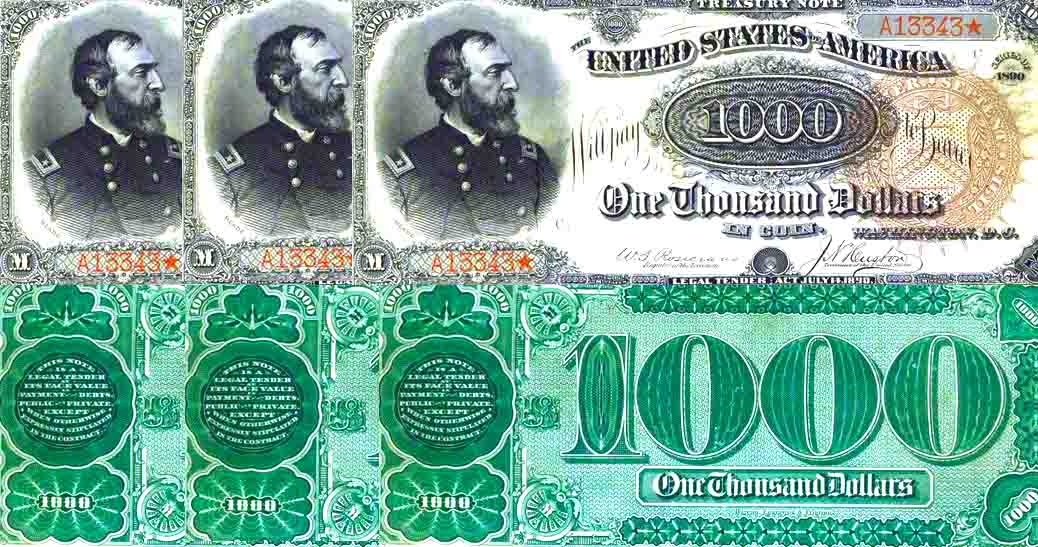
One of the rarest and most sought-after pieces of American paper money, the Grand Watermelon $1,000 banknote from the 1890s sold at auction in 2018 for a record-breaking USD2.04 million. Only seven such notes are known to exist, three in private collections. Despite its playful name – which refers to the design of the zeros on the note – the Grand Wa-
No.1 most popular animal: the all-seeing eagle
Many countries have printed gorgeous images of wildlife on banknotes – from the dove and palm leaves on Ethiopia’s new 200-birr note, to the renowned African fish eagle found on all of Zambia’s kwacha notes, to elephants, lions, and buffalo on South African Rand banknotes.

Rugby champions: featuring the Fiji Sevens
Fijians are passionate about rugby, both the traditional 15-a-side format and 7-a-side. The national 7-a-side team, known as the Fiji Sevens, is one of the most successful in the world, winning gold at the 2016 Summer Olympics. The Republic of Fiji created its first ever $7 bill after the Olympic success, honouring the team by printing two million of a special-edition banknote featuring the players.
Sustainability: what do banknotes and bananas have in common?
There is a drive for note manufactures to be sustainable. In some cotton bank-notes, waste from the textile industry is used – short-fibre cotton that can’t be used for clothing or furnishings and would otherwise be discarded. The new Philippine peso is as organic as they come, made of 80% cotton and 20% local abacá banana hemp, which is also used for tea bags, cigarette paper, sausage casings, and industrial filters.
Costs of production: how much is a bank-note?
The costs of producing paper money depend on many factors, such as the size of the banknote, its security features, and the production quantity. According to the German Federal Bank, a euro banknote costs on average 8 cents to produce, while in the US the Federal Re-serve says that the cost of printing paper money ranges from 7.7 cents to 19.6 cents per note.
To art and back: Warhol’s money on the wall
Andy Warhol’s “Dollar Sign” series from 1982 has become an immediately recognizable icon depicting the moment when art intersects with money and commerce. At the time they were made, the signs reflected Warhol’s fascination with mon-
Banknote resilience: testing conditions
Throughout their lifetime, banknotes have to be resilient. Low-value notes, in particular – currency that passes through our hands many times a day – need to be robust. Banknote paper must therefore meet standards in special stress tests, including being exposed to 120°C hot air for 30 minutes; put through a washing machine cycle at 95°C and 900 spin revolutions per minute; and enduring five minutes of pressing under a 160°C iron. Once the paper has survived that, the banknotes are ready for anything we can do to them.
The world’s smallest: the 10-bani note
Romania’s 10-bani coin is one of the currencies that features an eagle, this time wearing a crown. But back in 1917, the 10-bani note that was produced as part of a war series by the country’s Ministry of Finance is the smallest banknote ever to be produced in the world. Measuring a miniature 44 mm by 33 mm, the green banknote featured King Ferdinand I on the front and the coat of arms of Romania on the back. Underneath the coat of arms was printed text, threatening counterfeiters with five to 10 years in prison.
Banknote analytics
Nowadays, banknotes are counted, sorted, and verified by banknote processing systems, using sensors to evaluate fitness and authenticity. The sensors also read the banknote’s magnetic characteristics and differentiate the images of the various magnetic substances.
170 billion banknotes: removed and replaced every year
When banknotes become heavily wrinkled, damaged, or dirty, security can’t be guaranteed. Banknotes are therefore checked and replaced regularly: indeed, each year, a staggering 170 billion banknotes are shredded and replaced with brand-new ones, hot off the press. So, when it’s gone, it’s gone for good – leaving room for fresh, new money.
Article by Giesecke+Devrient (Germany)
 Some had it tucked away in their wallets. Many believed it was a good luck charm. Others even created shrines to the object.
The world’s only $7 banknote was released by Fiji to commemorate the rugby-loving nation’s first Olympic medal, when its men’s rugby sevens team won gold at the Rio de Janeiro Games.
Ahead of the Flying Fijians’ second Olympics appearance in Tokyo, and as the Pacific nation battled a raging COVID-19 outbreak, owners showed off the money with the hope that the team would make history again.